
Aluminum casting plays a foundational role in modern robotics manufacturing by enabling the production of lightweight, high-strength, and highly precise components. As industrial automation expands across automotive, aerospace, electronics, and logistics industries, demand for reliable robotic systems continues to grow—driving the need for advanced manufacturing methods such as aluminum die casting and sand casting.
Aluminum casting allows manufacturers to produce complex robotic parts with excellent repeatability, structural integrity, and cost efficiency, making it one of the most important processes in robotics hardware production.
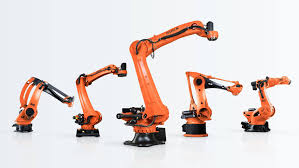
1. Why Aluminum is Ideal for Robotics
Aluminum is widely used in robotics due to its unique combination of physical and mechanical properties:
Lightweight Strength
Aluminum provides an excellent strength-to-weight ratio, reducing the load on robotic motors and improving speed, efficiency, and energy consumption. Lighter components allow for faster robotic movement and higher precision in dynamic applications.
Structural Durability
Aluminum alloys offer sufficient mechanical strength for robotic arms, frames, and enclosures while maintaining resistance to wear and mechanical stress. This ensures long operational life in industrial environments.
Corrosion Resistance
Robotic systems often operate in demanding environments. Aluminum's natural corrosion resistance enhances durability and reduces maintenance requirements over time.
Thermal Conductivity
Aluminum efficiently dissipates heat, making it suitable for motor housings, control units, and electronic enclosures that require stable thermal performance.
2. Aluminum Casting Processes Used in Robotics
Robotic components are typically produced using several aluminum casting methods, depending on performance requirements and production scale.
2.1 Sand Casting
Sand casting is commonly used for:
Large structural robot components
Prototypes and low-volume production
Complex shapes with lower cost requirements
It offers flexibility but lower precision compared to die casting.
2.2 Die Casting
Die casting is the most widely used process for robotics components in mass production.
Key advantages include:
High dimensional accuracy
Excellent surface finish
Consistent repeatability
Fast production cycles
This makes it ideal for standardized robot components such as housings, brackets, and joint structures.
2.3 Permanent Mold and Gravity Casting
These permanent mold casting and gravity casting are used for medium-volume production where improved mechanical properties and better surface quality are required compared to sand casting.
3. Key Aluminum Cast Components in Robotics
Aluminum casting is used to manufacture a wide range of robotic parts, including:
Structural Components
Frames and support structures
Base housings
These require high strength with minimal weight to ensure motion efficiency.
Functional Mechanical Parts
Gear housings
Joint assemblies
End-of-arm tooling supports
These parts demand tight dimensional tolerances for precision movement.
Enclosures and Covers
Motor housings
Control system casings
Electronic protection shells
Aluminum provides shielding, cooling, and structural protection.
4. Benefits of Aluminum Casting in Robotics Manufacturing
4.1 High Precision and Repeatability
Die casting enables the production of complex robotic geometries with tight tolerances, ensuring consistent performance across large production runs.
4.2 Lightweight Performance Optimization
Reducing robot weight improves:
Speed of motion
Energy efficiency
Load capacity of actuators
This is critical for industrial automation systems.
4.3 Durability and Long Service Life
Aluminum alloys provide excellent resistance to fatigue, corrosion, and mechanical stress, ensuring reliable operation in continuous-use environments.
4.4 Cost Efficiency at Scale
Once tooling is established, aluminum casting allows high-volume production at low unit cost, making it ideal for global robotics manufacturing.
4.5 Design Flexibility
Casting enables engineers to integrate multiple functions into a single component, reducing assembly complexity and improving structural efficiency.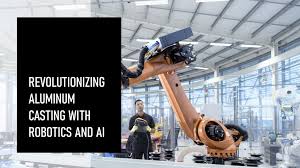
5. Industrial Applications of Aluminum Cast Robotics Components
Aluminum cast components are widely used across multiple industries:
Automotive Manufacturing
Welding robots
Assembly line automation
Painting systems
Aerospace Industry
Precision robotic arms for assembly
Lightweight handling systems
Logistics and Warehousing
Automated picking robots
Sorting and transport systems
Electronics and Precision Manufacturing
Semiconductor handling robots
Micro-assembly systems
6. Role of Aluminum Casting in Robotics Innovation
As robotics evolves toward higher speed, precision, and intelligence, aluminum casting supports key engineering trends:
Miniaturization
Smaller robots require compact, lightweight, high-precision components.
High-Speed Automation
Reduced mass enables faster acceleration and improved cycle times.
Structural Optimization
Advanced casting allows topology-optimized designs that reduce material usage while maintaining strength.
System Integration
Multiple functions can be integrated into a single cast component, reducing assembly steps and increasing reliability.
7. Challenges and Engineering Considerations
Despite its advantages, aluminum casting in robotics also presents challenges:
Precision control of thin-wall structures
Porosity management in complex geometries
Tooling cost for high-pressure die casting
Thermal distortion during solidification
These challenges are addressed through improved mold design, simulation software, and advanced alloy development.
8. Future Outlook
The future of aluminum casting in robotics is closely tied to the growth of automation and Industry 4.0:
Increased use of lightweight robotics in AI-driven factories
Integration of simulation-based casting design
Expansion of electric and collaborative robots (cobots)
Greater demand for high-precision, mass-produced robotic components
Aluminum casting will continue to be a core enabling technology for scalable, efficient, and intelligent robotic systems.
Conclusion
Aluminum casting is a critical manufacturing foundation for the robotics industry. By combining lightweight strength, precision manufacturing capability, corrosion resistance, and cost-effective scalability, it enables the production of high-performance robotic systems across industries.
As robotics continues to evolve, aluminum casting will remain essential in delivering the structural and functional components that power the next generation of automated systems.
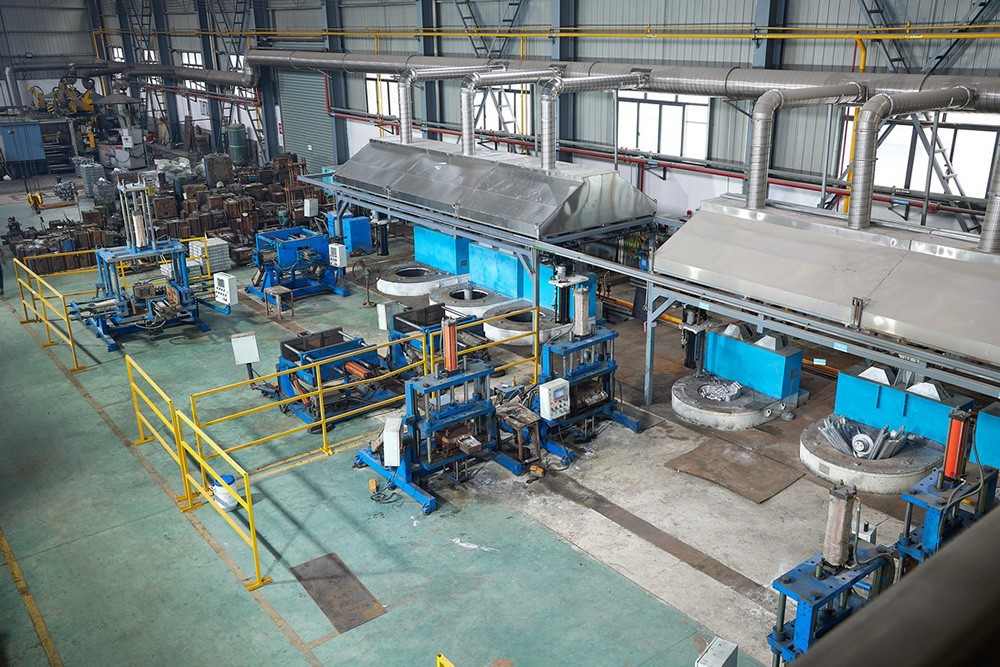
Dongrun Casting has 20000 square meters of facility houses and 200 production & test equipment, From quotation and tooling design to casting and finished machining, we can work with you at every stage. We serve a wide range of industries-from Fortune 500 corporations to small and midsize OEMs. Our products include Automotive&trucking, Electric Utility & Communications, Metering Systems, the Hydraulic Industry, Medical Devices, Lighting, Fuel and Gas Pressure, and Furniture parts.
More Details: www.dongruncasting.com