
Aluminum die casting plays a critical role in the advancement of renewable energy systems by providing lightweight, durable, corrosion-resistant, and highly precise components. As the global energy sector shifts toward sustainability, die casting has become a key manufacturing process supporting wind, solar, and energy storage technologies.
Its ability to produce complex geometries at scale while maintaining performance and efficiency makes it ideal for modern clean energy infrastructure.
1. Why Aluminum Die Casting is Ideal for Renewable Energy
Aluminum die casting is widely used in renewable energy applications because it offers a unique combination of engineering and environmental benefits:
Lightweight Strength
Aluminum components are significantly lighter than steel while maintaining high structural strength. This is particularly important in wind and solar systems where reducing weight improves efficiency and installation feasibility.
Corrosion Resistance
Renewable energy systems are often exposed to harsh outdoor environments. Aluminum naturally resists corrosion, ensuring long service life with minimal maintenance.
Thermal Conductivity
Aluminum efficiently dissipates heat, making it ideal for thermal management components such as inverter housings, heat sinks, and electronic enclosures.
Design Flexibility
High-pressure die casting enables complex geometries and integrated structures that reduce assembly requirements and improve system performance.
Cost Efficiency at Scale
Die casting is highly suitable for mass production, offering consistent quality and reduced unit costs for large renewable energy deployments.
2. Aluminum Die Casting in Wind Energy Applications
Wind energy is one of the most important sectors benefiting from aluminum die casting. Components must withstand mechanical stress, vibration, weather exposure, and continuous operation.
Key Wind Turbine Components
Nacelle Housings
The nacelle contains the gearbox, generator, and control systems. Aluminum die-cast housings provide:
Structural strength
Lightweight construction
Heat dissipation for electrical systems
Rotor Hubs
Hubs connect turbine blades to the main shaft. Die-cast aluminum and magnesium alloys provide:
High fatigue resistance
Dimensional accuracy
Reduced rotational mass
Blade Root Fittings
These components require high precision and mechanical reliability to transfer wind loads efficiently from blades to the hub.
Control System Components
Brackets, housings, and enclosures benefit from aluminum’s corrosion resistance and machining precision, ensuring stable turbine operation.
Benefits for Wind Energy
Reduced turbine weight improves energy efficiency
High precision supports aerodynamic optimization
Durable components reduce maintenance downtime
Scalable production supports global wind farm deployment
3. Aluminum Die Casting in Solar and Energy Systems
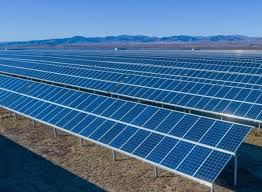
Solar energy systems also rely heavily on aluminum die casting for structural and thermal components.
Common Solar Applications
Inverter housings and cooling systems
Solar panel frames and mounting brackets
Battery storage enclosures
Structural supports for PV systems
Advantages in Solar Systems
Excellent heat dissipation improves inverter reliability
Lightweight frames reduce installation cost
Corrosion resistance ensures outdoor durability
High production efficiency supports large-scale solar deployment
4. Sustainability Advantages of Aluminum Die Casting
Beyond performance benefits, aluminum die casting contributes significantly to environmental sustainability.
4.1 Recyclability
Aluminum is 100% recyclable without loss of material properties, making it one of the most sustainable industrial metals.
4.2 Energy Efficiency in Production
Modern die casting processes are optimized for:
Reduced cycle times
Lower energy consumption per part
High production efficiency in automated systems
4.3 Waste Reduction
Die casting is a near-net-shape process, minimizing machining waste and scrap material.
4.4 Long Product Life Cycle
Aluminum components are durable and corrosion-resistant, reducing replacement frequency and lifecycle environmental impact.
4.5 Lightweighting and Emissions Reduction
In wind and other energy systems, lightweight aluminum components reduce structural load and improve energy efficiency, indirectly lowering carbon emissions over the system’s lifetime.
5. Manufacturing Trends in Renewable Energy Die Casting
The industry is evolving toward more advanced and efficient production systems:
Digital Manufacturing Integration
Simulation-driven mold design
Predictive defect analysis
Process optimization using digital twins
Automation and High-Volume Production
Robotic pouring systems
Automated trimming and finishing
Smart quality inspection systems
Advanced Alloy Development
New aluminum alloys are being developed to improve:
Fatigue resistance
Heat tolerance
Corrosion performance
Hybrid Energy Manufacturing Plants
Many foundries are integrating renewable energy sources (solar and wind) into production facilities, further reducing carbon footprints.
6. Challenges and Engineering Considerations
Despite its advantages, aluminum die casting for renewable energy also faces engineering challenges:
High tooling cost for complex dies
Thermal fatigue of molds over long production cycles
Porosity control in large structural castings
Design constraints for ultra-thick or ultra-thin sections
These challenges are being addressed through improved gating design, simulation software, and advanced casting techniques.
7. Future Outlook
The future of aluminum die casting in renewable energy is strongly linked to the global energy transition.
Key trends include:
Increased demand for wind turbine components as wind energy expands globally
Growth in solar infrastructure requiring lightweight, corrosion-resistant components
Expansion of energy storage systems using aluminum housings
Greater emphasis on recyclable and low-carbon manufacturing systems
As renewable energy systems scale globally, aluminum die casting will remain a foundational manufacturing technology due to its combination of performance, sustainability, and scalability.
Conclusion
Aluminum die casting is a critical enabler of the renewable energy revolution. Its ability to deliver lightweight, high-strength, corrosion-resistant, and precision-engineered components makes it indispensable in wind turbines, solar systems, and energy infrastructure.
At the same time, its sustainability advantages—recyclability, energy efficiency, and reduced material waste—align closely with the goals of clean energy development.
As renewable energy continues to expand, aluminum die casting will play an increasingly important role in building a more efficient, durable, and sustainable global energy system.
Dongrun Casting has 20000 square meters of facility houses and 200 production & test equipment, From quotation and tooling design to casting and finished machining, we can work with you at every stage. We serve a wide range of industries-from Fortune 500 corporations to small and midsize OEMs. Our products include Automotive&trucking, Electric Utility & Communications, Metering Systems, the Hydraulic Industry, Medical Devices, Lighting, Fuel and Gas Pressure, and Furniture parts.
More Details: www.dongruncasting.com