
Aluminum gravity casting, also known as permanent mold casting, is a versatile manufacturing process for producing strong, lightweight, and dimensionally stable aluminum components. Unlike high-pressure die casting, molten aluminum fills a reusable metal mold primarily under the force of gravity. This relatively slow and controlled filling process can reduce turbulence and gas entrapment while providing good mechanical properties and surface quality.
Gravity casting is particularly suitable for medium-volume production, structural components, and applications where strength, durability, and cost need to be balanced.
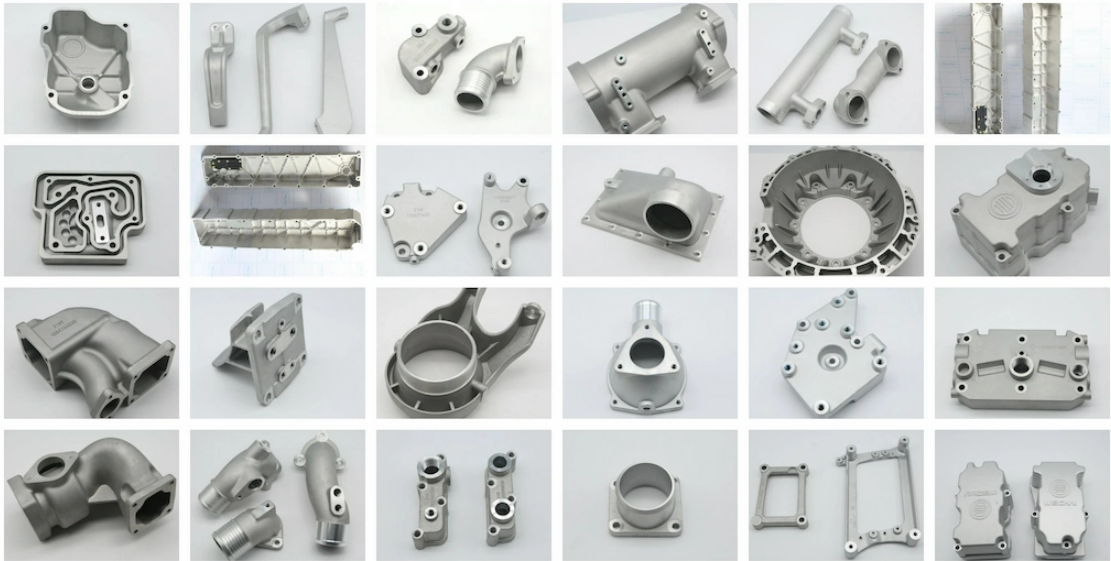
What Is Aluminum Gravity Casting?
In gravity casting, molten aluminum alloy is poured into a reusable steel mold without applying high external pressure. The metal flows into the mold cavity under gravity and then solidifies into the required shape.
Compared with sand casting, permanent metal molds generally provide better surface finish, dimensional consistency, and mechanical properties. Compared with high-pressure die casting, gravity casting requires less expensive tooling but has slower production cycles and is less suitable for very thin-wall, high-volume parts.
The basic process includes:
Mold preparation – The permanent metal mold is heated and coated to control heat transfer and facilitate part release.
Aluminum melting and pouring – The selected alloy is melted and poured into the mold at a controlled temperature.
Mold filling – Gravity allows the molten metal to flow gradually through the gating system.
Solidification – The aluminum cools and solidifies inside the mold, with risers and mold design helping compensate for shrinkage.
Part removal – The casting is removed after reaching a suitable temperature.
Finishing and machining – Gates and risers are removed, followed by heat treatment, CNC machining, surface finishing, and inspection when required.
Why Aluminum-Silicon Alloys Are Widely Used
Aluminum-silicon (Al-Si) alloys are among the most commonly used materials for gravity casting because silicon improves molten-metal fluidity and helps the metal fill the mold cavity effectively.
Different alloy compositions provide different combinations of strength, ductility, corrosion resistance, pressure tightness, machinability, and heat-treatment response. Therefore, there is no single "best" aluminum alloy. The appropriate material depends on the component's operating conditions and performance requirements.
A356 / A357
A356 is one of the most widely used aluminum alloys for gravity casting. It offers a good balance of:
Strength
Ductility
Corrosion resistance
Castability
Weldability
Heat-treatment response
A356 responds particularly well to T6 heat treatment, which can significantly improve tensile strength, yield strength, and hardness.
A357 is a higher-performance variation with improved mechanical properties and is suitable for components exposed to higher loads, vibration, and impact. Typical applications include automotive components, wheels, motor housings, structural parts, and robotic components.
A319
A319 provides good strength, machinability, and pressure-tightness. It is commonly considered for engine components, transmission housings, hydraulic components, and other applications where leak resistance is important.
ZL104
ZL104 is an Al-Si-Mg-Mn alloy known for good mechanical properties and dimensional stability. It can be heat treated and is suitable for components requiring dimensional accuracy, sealing performance, and resistance to deformation.
Typical applications include:
Hydraulic housings
Pneumatic components
Pump bodies
Instrument housings
Precision mechanical components
ADC12 / A380
ADC12 and A380 provide excellent fluidity and cost efficiency. They are more commonly associated with die casting but can also be considered for certain gravity casting applications.
They are suitable for brackets, housings, heat sinks, and general equipment components where extreme mechanical strength is not the primary requirement.
LM25
LM25 is widely used in European applications and is broadly comparable to A356. It provides a useful combination of strength, corrosion resistance, castability, and heat-treatment capability for automotive, industrial, and mechanical components.
Advantages of Aluminum Gravity Casting
1. Good Mechanical Properties
The controlled filling and solidification process can produce relatively dense castings with low porosity. With suitable alloy selection and heat treatment, gravity cast aluminum can achieve strong mechanical performance for structural applications.
2. Lightweight Construction
Aluminum offers a high strength-to-weight ratio, making gravity casting attractive for applications where reducing component weight is important.
This is particularly valuable in:
Automotive components
Robotics
Transportation equipment
Industrial machinery
New energy equipment
3. Reusable Molds
Permanent molds can be reused for multiple production runs. This makes gravity casting more economical than disposable-mold processes once production volumes become sufficiently high.
4. Good Surface Finish
Metal molds generally provide a smoother as-cast surface than sand molds. Critical surfaces can also be improved through CNC machining, polishing, or other finishing processes.
5. Suitable for Medium-Volume Production
Gravity casting occupies a useful position between sand casting and high-pressure die casting. It can be particularly attractive for projects requiring hundreds to several thousand parts per year, where die-casting tooling may not be economically justified.
Applications of Aluminum Gravity Casting
Aluminum gravity castings are used across a wide range of industries.
Automotive
Typical components include:
Suspension components
Control arms
Steering components
Brake housings
Wheel hubs
Engine and transmission housings
The combination of low weight, strength, and heat-treatment capability makes aluminum gravity casting suitable for many automotive applications.
Robotics and Automation
Lightweight aluminum castings can be used for:
Robot arm components
Motor housings
Joint housings
Structural brackets
Gearbox housings
Automation equipment frames
Complex ribs and mounting features can be incorporated into the casting design to achieve a good balance between weight, stiffness, and strength.
Industrial Equipment
Common applications include:
Valve bodies
Hydraulic manifolds
Pump housings
Compressor housings
Gearbox covers
Machine components
Materials such as A356, A319, and ZL104 can be selected according to requirements for strength, pressure tightness, dimensional stability, or corrosion resistance.
Marine Equipment
Corrosion-resistant aluminum alloys can be used for:
Pump housings
Propeller components
Marine fittings
Deck hardware
Other components exposed to moisture and saltwater
Aerospace and Electronics
Gravity cast aluminum is also used for selected structural brackets, equipment housings, electronic enclosures, and ground-support components, particularly where weight reduction and moderate production volumes are important.
Gravity Casting vs. Sand Casting vs. Die Casting
| Feature | Gravity Casting | Sand Casting | Die Casting |
|---|---|---|---|
| Mold | Reusable metal mold | Sand mold | High-pressure metal mold |
| Production volume | Medium | Low to medium | High |
| Tooling cost | Medium | Low | High |
| Surface finish | Good | Moderate | Excellent |
| Mechanical properties | Good | Moderate | Good |
| Cycle time | Moderate | Slow | Very fast |
| Thin-wall capability | Moderate | Moderate | Excellent |
| Typical application | Structural & medium-volume parts | Prototypes & complex/large parts | High-volume precision parts |
Gravity casting is generally a good choice when mechanical performance is more important than extremely fast cycle times, but the production volume does not justify the tooling investment required for high-pressure die casting.
How to Choose the Right Aluminum Alloy
Material selection should be based on the actual requirements of the finished component rather than choosing an alloy simply because it is commonly used.
Consider:
Mechanical load: tensile strength, yield strength, fatigue resistance
Operating environment: temperature, moisture, chemicals, saltwater
Pressure requirements: especially for hydraulic and pneumatic components
Corrosion resistance
Dimensional stability
Heat-treatment requirements
Machining requirements
Production volume
Overall cost
For example, A356-T6 is a strong general-purpose option, while A319 may be preferable where pressure tightness is important. ZL104 can be considered when dimensional stability is a priority, while other alloys may be selected for cost or corrosion-resistance requirements.
Conclusion
Aluminum gravity casting provides an effective balance of strength, lightweight construction, dimensional stability, surface quality, and production cost. Its use of reusable molds makes it particularly attractive for medium-volume production, while a wide range of aluminum alloys allows manufacturers to tailor material properties to specific applications.
From automotive and robotics to hydraulic equipment, marine components, aerospace equipment, and industrial machinery, gravity casting remains a practical solution for producing durable and cost-effective aluminum components.
For demanding applications, combining gravity casting, heat treatment, CNC machining, surface finishing, and dimensional inspection can further improve the performance and consistency of the finished parts.
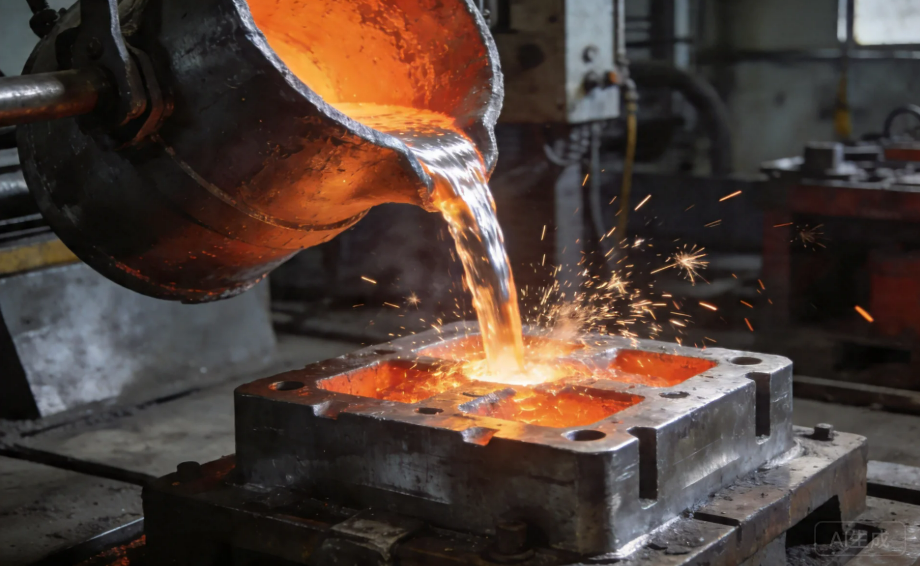
Dongrun Casting has 20000 square meters of facility houses and 200 production & test equipment, From quotation and tooling design to casting and finished machining, we can work with you at every stage. We serve a wide range of industries-from Fortune 500 corporations to small and midsize OEMs. Our products include Automotive&trucking, Electric Utility & Communications, Metering Systems, the Hydraulic Industry, Medical Devices, Lighting, Fuel and Gas Pressure, and Furniture parts.
More Details: www.dongruncasting.com