
The die casting industry is undergoing a major transformation as manufacturers adopt advanced automation technologies to improve productivity, precision, and competitiveness. Traditional die casting operations often rely on manual labor for tasks such as metal pouring, mold spraying, casting removal, trimming, and material handling. These processes can be labor-intensive, repetitive, and affected by human factors.
Automation systems for die casting integrate industrial robots, intelligent control systems, sensors, and advanced manufacturing equipment to create a more efficient and stable production environment. By reducing manual intervention and improving process control, automated systems help manufacturers achieve higher output, consistent quality, improved safety, and reduced production costs.
Today, automated die casting solutions are widely used in industries including automotive, electric vehicles, electronics, telecommunications, robotics, industrial equipment, and consumer products, where high-volume production and strict quality requirements are essential.
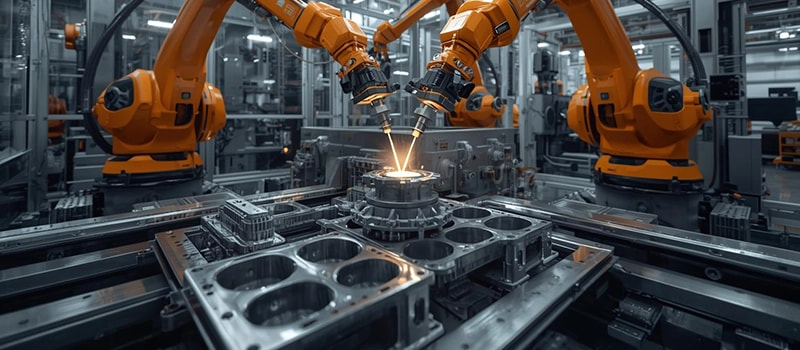
What Are Automation Systems for Die Casting?
Automation systems for die casting are integrated technologies designed to automate different stages of the casting process. These systems combine hardware and software to control production operations, improve process stability, and optimize manufacturing efficiency.
A complete automated die casting system may include:
Automated die casting machines
Robotic arms and manipulators
Automatic metal pouring systems
Mold spraying systems
Material handling equipment
Temperature control systems
PLC control systems
Automated inspection equipment
Data monitoring and smart manufacturing platforms
In a fully automated production line, once molten aluminum is injected into the mold, robots and control systems can complete the following steps automatically:
Mold opening
Casting extraction
Mold spraying and cooling
Product transfer
Trimming and finishing
Quality inspection
Packaging or storage
This continuous workflow reduces production interruptions and creates a more reliable manufacturing process.
Benefits of Die Casting Automation
1. Increased Production Efficiency
One of the primary advantages of automation is improved production speed. Robots and automated equipment can operate continuously with consistent cycle times, allowing manufacturers to increase output while maintaining stable performance.
Compared with manual operations, automated systems reduce delays between production steps and improve equipment utilization. This is especially valuable for industries requiring large quantities of identical components, such as automotive and electronics manufacturing.
Automation also allows manufacturers to optimize labor allocation. Instead of performing repetitive operations, employees can focus on equipment monitoring, maintenance, quality improvement, and process management.
2. Improved Product Quality and Consistency
Consistency is critical in die casting because small variations in process conditions can affect product performance. Factors such as injection pressure, mold temperature, cooling time, and material flow must be precisely controlled.
Automation systems improve quality by maintaining stable production parameters throughout the manufacturing process.
Key advantages include:
More accurate process control
Reduced human errors
Stable cycle times
Improved dimensional accuracy
Lower defect rates
Automated monitoring systems can collect real-time production data and identify abnormal conditions before they result in defective parts.
For example, sensors can monitor temperature changes, pressure fluctuations, and machine performance, allowing operators to quickly adjust production parameters and prevent quality issues.
3. Enhanced Workplace Safety
Die casting involves high temperatures, heavy components, molten metals, and repetitive movements. Manual handling in these environments can create safety risks for workers.
Automation reduces employee exposure to dangerous operations by allowing robots to perform tasks such as:
Handling hot castings
Removing parts from molds
Applying release agents
Transporting heavy components
This creates a safer working environment while improving overall production efficiency.
4. Reduced Material Waste and Production Costs
Casting defects such as porosity, shrinkage, incomplete filling, and surface imperfections can increase manufacturing costs. Automation helps reduce these problems by improving process stability and reducing production variations.
Benefits include:
Lower scrap rates
Reduced material waste
Better resource utilization
Improved production yield
Although automated systems require initial investment, the long-term savings from improved efficiency, lower labor costs, and reduced waste often provide significant returns.
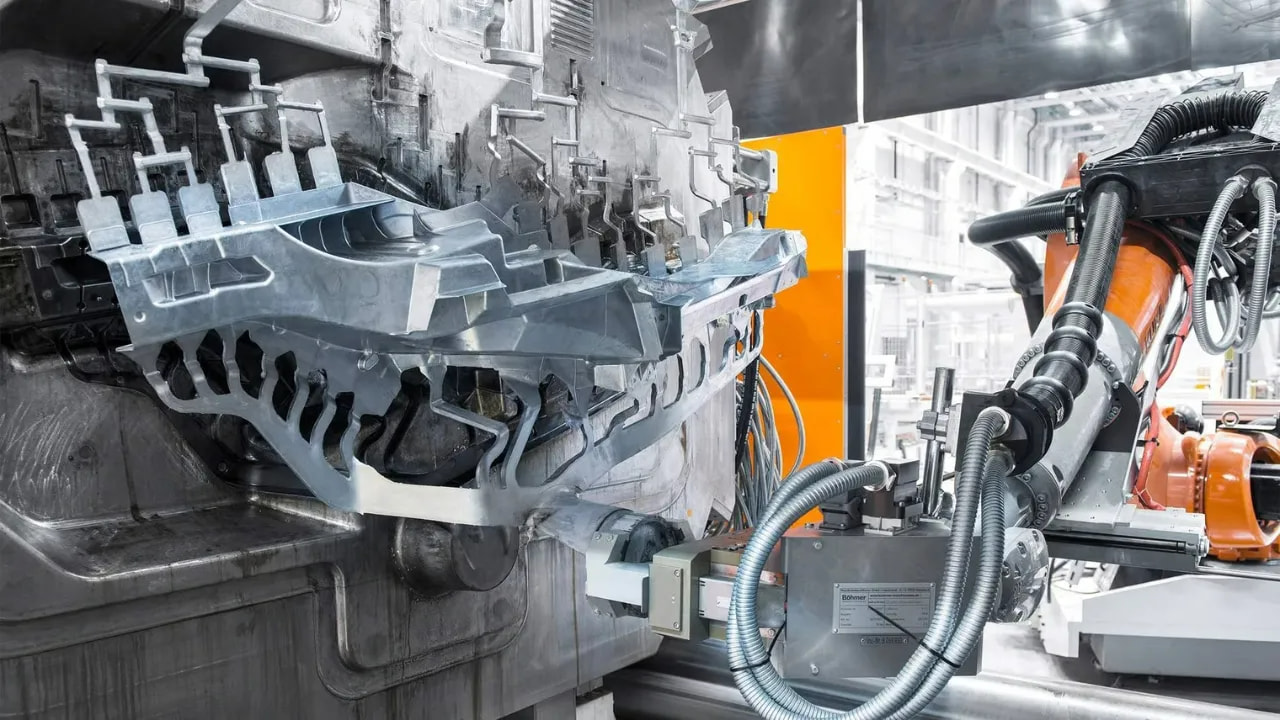
Key Components of Die Casting Automation Systems
1. Automated Die Casting Machines
The die casting machine is the core component of an automated production line. Modern machines are equipped with advanced control systems that precisely manage:
Injection speed
Injection pressure
Clamping force
Cooling cycles
Machine timing
Advanced die casting machines can automatically adjust operating parameters to maintain stable production quality.
They are commonly used for aluminum, zinc, and magnesium alloy components requiring high strength, lightweight design, and precise dimensions.
2. Industrial Robots and Robotic Arms
Robotic systems play an essential role in automated die casting production. They provide high-speed, accurate, and repeatable operations that improve production efficiency.
Common robotic applications include:
Casting removal
Mold spraying
Product transfer
Trimming
Packaging
Six-axis robots are widely used because they offer flexible movement and can handle complex production tasks.
Robotic systems are particularly valuable for large or high-temperature components where manual handling is difficult and unsafe.
3. Automatic Mold Spraying Systems
Mold spraying is a critical step in die casting because it affects mold temperature, casting release, and surface quality.
Traditional manual spraying can create inconsistent results due to variations in spray amount, timing, and coverage.
Automated spraying systems provide precise control over:
Spray quantity
Spray position
Spray duration
Coverage area
Advantages include:
More consistent mold conditions
Improved surface quality
Longer mold life
Reduced release agent consumption
Robotic spraying systems help maintain stable production conditions and reduce defects caused by improper mold preparation.
4. Automated Material Handling Systems
Material handling automation connects different production stages and creates a smoother manufacturing workflow.
These systems include:
Conveyor systems
Automated guided vehicles (AGVs)
Robotic transfer systems
Storage and sorting equipment
Automated handling reduces manual transportation, minimizes production delays, and improves factory organization.
For large-scale manufacturing facilities, automated logistics systems are essential for maintaining efficient production flow.
5. Temperature Control and Cooling Systems
Temperature control is one of the most important factors affecting die casting quality.
Unstable mold temperatures can lead to:
Cracks
Poor surface finish
Dimensional changes
Reduced mold life
Automated temperature control systems continuously monitor and adjust:
Mold temperature
Cooling water flow
Heat balance
Cooling cycles
Stable temperature management improves product consistency and extends tooling lifespan.
6. Intelligent Control and Monitoring Systems
Modern die casting automation relies heavily on digital control technologies.
PLC systems act as the central control platform, coordinating:
Die casting machines
Robots
Sensors
Cooling systems
Inspection equipment
With the development of Industry 4.0, many factories are also adopting IoT-based monitoring systems.
These technologies allow manufacturers to:
Collect production data
Monitor equipment conditions
Analyze performance trends
Predict maintenance requirements
Improve production planning
Smart manufacturing systems help companies move from traditional production toward data-driven operations.
Automated Quality Inspection in Die Casting
Quality inspection is becoming increasingly automated as manufacturers demand higher accuracy and faster production cycles.
Modern inspection technologies include:
Visual Inspection Systems
AI-powered cameras can detect surface defects such as:
Scratches
Cracks
Porosity marks
Surface irregularities
Dimensional Inspection
Laser scanners and coordinate measuring machines (CMMs) verify product dimensions and ensure compliance with design specifications.
X-ray Inspection
X-ray systems detect internal defects that cannot be identified through visual inspection, such as internal voids and porosity.
Automated inspection improves quality consistency and reduces reliance on manual inspection methods.
Applications of Automated Die Casting Systems
Automotive Industry
The automotive sector is one of the largest users of automated die casting technology.
Applications include:
Engine components
Transmission housings
Motor housings
Battery components
Structural parts
The growth of electric vehicles has further increased demand for lightweight aluminum components with high precision and reliability.
Electronics and Consumer Products
Automation supports the production of aluminum housings, frames, heat sinks, and structural components used in electronics and communication equipment.
High precision and consistent surface quality are essential for these applications.
Industrial Equipment
Industrial manufacturers use automated die casting for components such as:
Machine housings
Pump bodies
Gearbox parts
Hydraulic components
Automation helps improve durability, reliability, and production efficiency.
Future Trends in Die Casting Automation
The future of die casting automation will focus on smarter, more flexible, and more connected manufacturing systems.
Key trends include:
Artificial Intelligence Integration
AI technology will improve defect detection, process optimization, and production decision-making.
Predictive Maintenance
Smart sensors will analyze equipment performance and predict potential failures before they occur, reducing downtime.
Fully Connected Smart Factories
Future factories will integrate robots, automated logistics, digital management systems, and real-time data analysis into a complete smart manufacturing ecosystem.
Flexible Automation Solutions
Manufacturers will increasingly adopt modular automation systems that can adapt to different products, materials, and production volumes.
Conclusion
Automation systems for die casting are becoming a key factor in modern manufacturing success. By combining robotics, intelligent control, automated inspection, and smart monitoring technologies, manufacturers can achieve higher productivity, better quality, improved safety, and lower operating costs.
As demand continues to grow for lightweight and high-performance aluminum components, automated die casting solutions will play an increasingly important role in creating efficient, reliable, and competitive manufacturing operations.
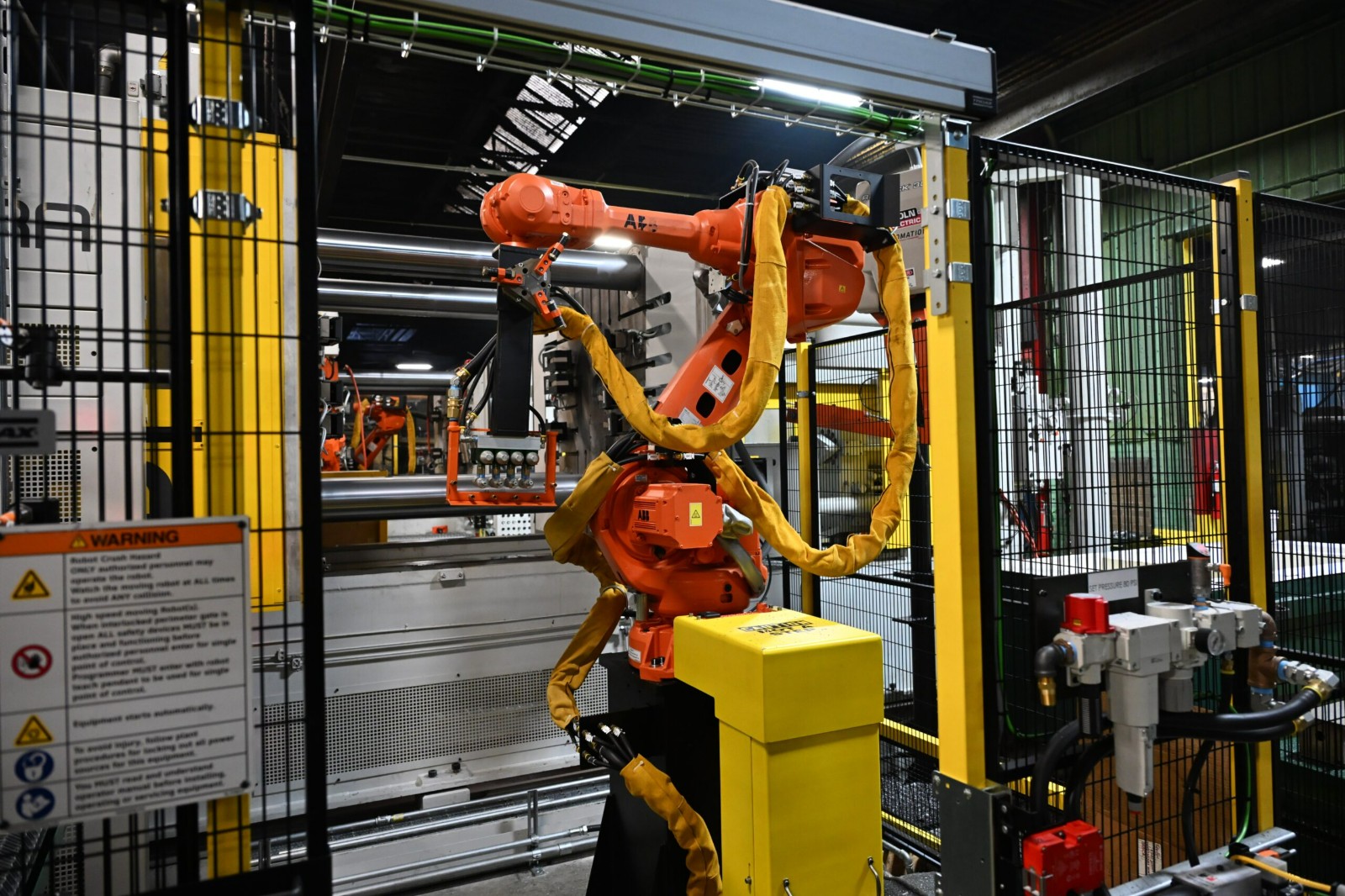
Dongrun Casting has 20000 square meters of facility houses and 200 production & test equipment, From quotation and tooling design to casting and finished machining, we can work with you at every stage. We serve a wide range of industries-from Fortune 500 corporations to small and midsize OEMs. Our products include Automotive&trucking, Electric Utility & Communications, Metering Systems, the Hydraulic Industry, Medical Devices, Lighting, Fuel and Gas Pressure, and Furniture parts.
More Details: www.dongruncasting.com