FANUC Die Casting Smart Manufacturing Solution:
A fully automated system covering spraying, part extraction, deburring, and machining. Integrated with iRVision vision systems and force sensors, it delivers consistent, high-quality casting production.Berrant Robotics + Die Casting Production Line:
Designed for foundry automation upgrades, this solution significantly improves production efficiency while reducing labor and operating costs.KUKA Cold Chamber Die Casting Solution:
Built on REIS Robotics technology, this system ensures stable processes and high casting quality for demanding applications.
Die casting of robot parts is a core technology in modern intelligent manufacturing and automation, widely used to produce structural components for industrial robots, humanoid robots, and related equipment. As the robotics industry advances toward lightweight, high-strength, and cost-efficient designs, die casting is increasingly applied to critical components such as joints, housings, and frames, with growing technical sophistication.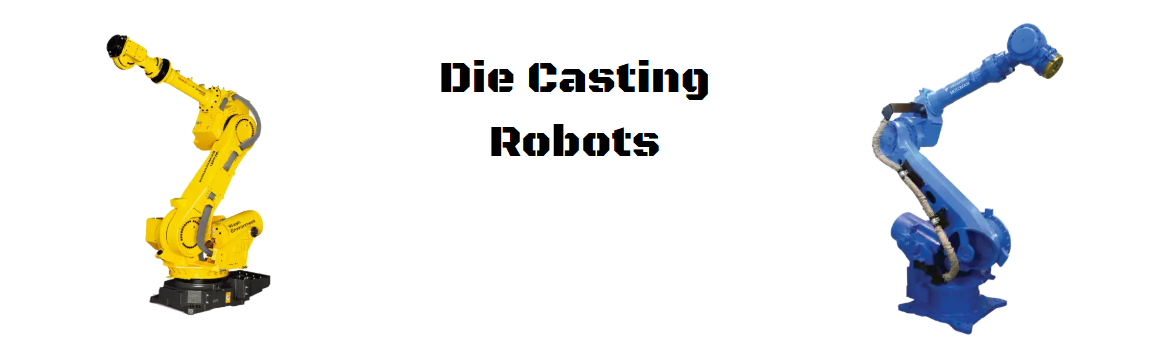
1. Mainstream Material Selection: Aluminum Alloy vs. Magnesium Alloy
At present, aluminum alloys and magnesium alloys are the two primary materials used in robotic die casting. Each offers distinct advantages and suits different application needs.
Aluminum Alloy Die Castings
Advantages:
Moderate density (2.63–2.85 g/cm³)
High strength and stiffness
Excellent machinability
Cost-effective for mass production
Typical Applications:
Large, integrated structural parts such as robot bodies, arm frames, and battery housings.
Common Grades:
ADC12-HP, A380.1: Improved flowability, ideal for complex and thin-walled structures
Heat-treatment-free 6xxx/7xxx series alloys: Modified die-casting versions of 6061, minimizing deformation risks associated with post-heat treatment
Magnesium Alloy Die-Casting Parts
Advantages:
Ultra-low density (~1.7 g/cm³), about 37% lighter than aluminum
Significant weight reduction, improving energy efficiency and operational range
Cost Perspective:
Raw material costs of approximately 30–50 RMB/kg, far lower than high-performance engineering plastics such as PEEK (400–1000 RMB/kg).
Representative Application:
Tesla's Optimus humanoid robot uses AZ91D magnesium alloy for joint components, achieving both weight and cost reduction.
Technical Challenges:
Magnesium die casting requires specialized equipment (e.g., Yizumi 6600T semi-solid molding machines) and controlled melting processes with inert gas protection to ensure safety and material stability:
the strategic selection between aluminum and magnesium alloys enables manufacturers to balance performance, weight, cost, and manufacturability in next-generation robotic systems.
2. Key Technological Trends in Die Casting
Vacuum High-Pressure Die Casting:
Applied by CITIC Dicastal for humanoid robot leg skeleton components, enabling mass production with significantly improved density and mechanical performance.Semi-Solid Die Casting:
Adopted by leading Chongqing die casting manufacturers, this technology has increased production efficiency by up to 9× while maintaining high dimensional accuracy.Heat-Treatment-Free Aluminum Alloys:
These alloys achieve required strength without post-aging, reducing deformation risks and supporting the trend toward integrated, large-structure die casting.Ultra-High Precision Manufacturing:
Robot joint molds now demand positional tolerances as tight as 0.01 mm, with finished parts often requiring no additional surface polishing.
3. How to Choose the Right Die-Casting Material for Robot Parts
Selecting the right die-casting material for robotic components requires balancing lightweight design, structural strength, precision, cost, and scalability. Today, aluminum alloys remain the mainstream choice, while magnesium alloys are increasingly adopted in high-end humanoid robots for advanced weight reduction.
I). Material Selection by Performance & Application
1. Preferred Choice: Heat-Treatment-Free Aluminum Alloys
Best for integrated die casting and large structural parts
Applications: Torso frames, leg frames, battery housings
Advantages: No post-heat treatment (minimal deformation), good flowability for complex shapes, mature supply chain, controlled costs
Recommended Grades:
ADC12-HP / A380.1 (improved): 220–260 MPa tensile strength, cost-effective for mass production
Modified 6061 / 7xxx series: 280–320 MPa, excellent fatigue resistance for load-bearing joints
Example: Tesla Optimus uses aerospace-grade aluminum die-cast shells, reducing total weight by ~15%
2. Premium Lightweight Option: Magnesium Alloys
Ideal for highly weight-sensitive moving parts
Applications: Hip, shoulder, and arm joints
Advantages: 37% lighter than aluminum, excellent vibration damping (up to 12 dB noise reduction), fast cooling, high productivity
Common Grades: AZ91D, ZM5 (used in Tesla Optimus and UBTECH Walker X)
Considerations: Requires inert gas protection during melting; higher initial mold cost but longer tool life
3. Materials for Special Functions
Zinc Alloy: Thin-walled, complex small parts (locks, sensor housings); smooth finish but high density
Copper Alloy: High electrical/thermal conductivity for motor end caps and EMI shielding; high cost and density
II). Key Material Parameters (Summary)
| Material | Density (g/cm³) | Tensile Strength (MPa) | Cost Level | Typical Applications |
|---|---|---|---|---|
| Aluminum Alloy | 2.63–2.85 | 220–320 | Medium | Frames, shells, skeletons |
| Magnesium Alloy | 1.75–1.90 | 200–300 | Medium–High | Joints, moving parts |
| Zinc Alloy | ~6.7 | 240–320 | Low | Small functional parts |
| Copper Alloy | ~8.4 | >400 | High | Conductive components |
III). Process-Driven Optimization Trends
Vacuum High-Pressure Die Casting: Reduces porosity and improves mechanical performance for high-reliability parts
Semi-Solid Forming: Enhances dimensional accuracy and surface quality for precision joints
Integrated Material–Structure–Process Design: Enables ultra-thin walls (as low as 0.6 mm) and up to 3× improvement in heat dissipation, as demonstrated by UBTECH’s magnesium alloy components
In summary:
Choose aluminum alloys for structural stability, cost control, and mass production
Choose magnesium alloys when extreme lightweight performance and motion efficiency are critical
Optimize material decisions alongside die-casting processes to unlock maximum performance and manufacturability
4. Industry Application Cases
Robotic Die Casting Manufacturer - DONGRUN CASTING
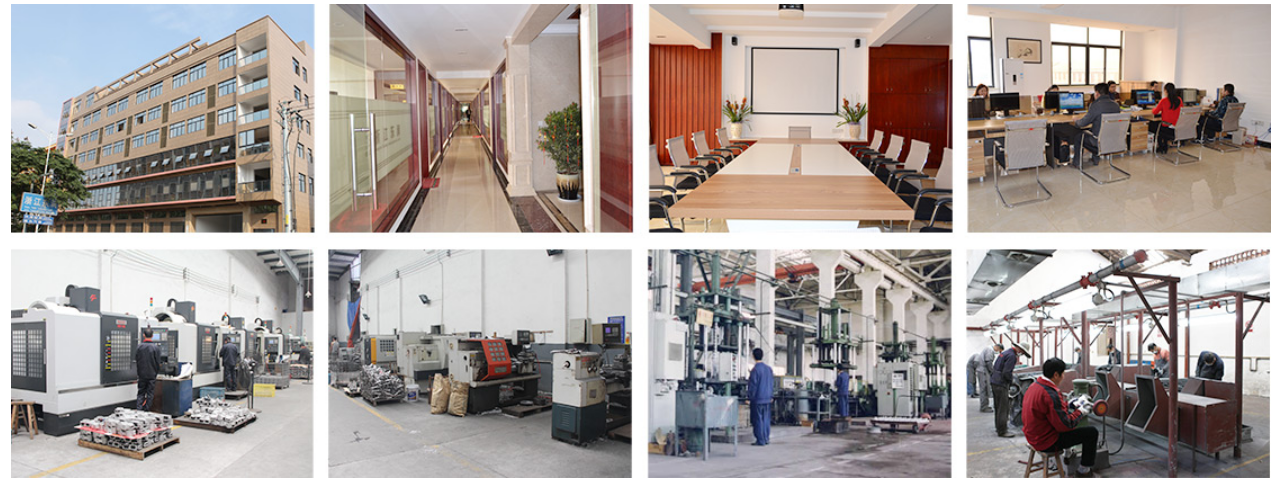
Dongrun Casting is a one-stop provider of robotic die casting solutions, offering end-to-end services from design support and precision die casting to CNC machining, surface finishing, and final assembly. Our experienced engineering team works closely with robot manufacturers worldwide, using advanced die casting technology to shorten development cycles. With high precision, tight tolerances, and excellent dimensional accuracy, our components enhance robot performance and reliability. Driven by innovation and quality, Dongrun delivers robotic die casting parts that meet the highest industry standards.
More Details: www.dongruncasting.com