
1. Introduction to Automotive Casting
Casting plays an essential role in modern automotive manufacturing. From engine blocks and transmission housings to structural components and electric vehicle battery enclosures, cast metal parts are widely used throughout vehicle systems.
As automotive manufacturers continue to pursue lightweight designs, improved fuel efficiency, greater structural performance, and lower production costs, casting technology has become increasingly important.
Among the available manufacturing methods, die casting stands out for its ability to produce complex metal components with excellent dimensional accuracy, consistent quality, and smooth surface finishes at high production volumes.
Automotive casting is not limited to die casting. Other processes, including sand casting, gravity casting, and investment casting, also serve different applications depending on component geometry, material requirements, production volume, and performance expectations.
This guide explores the major casting processes, materials, automotive applications, manufacturing benefits, and emerging trends shaping the future of automotive casting.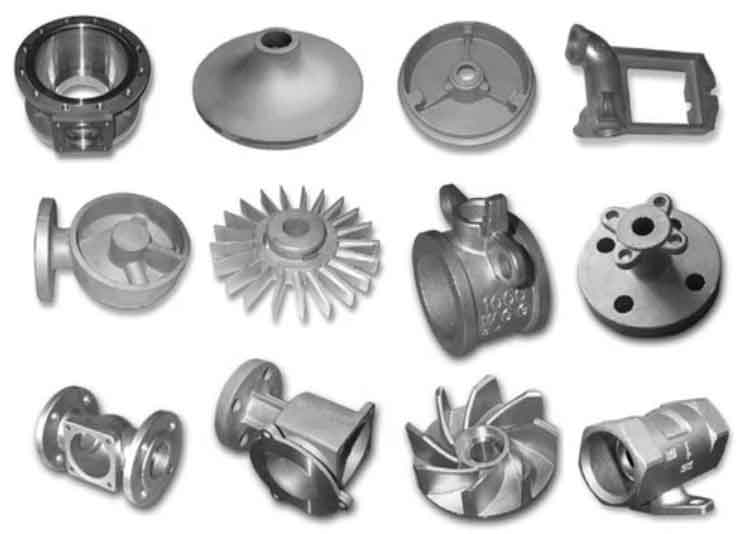
2. What Is Automotive Die Casting?
Automotive die casting is a metal manufacturing process in which molten metal is injected into a reusable metal mold, known as a die, under controlled pressure.
The die typically consists of two precision-machined steel halves that form the required component cavity. Once molten metal enters the cavity and solidifies, the mold opens and the finished casting is ejected.
This process enables manufacturers to produce complex metal parts with thin walls, integrated features, accurate dimensions, and consistent quality.
Die casting is particularly suitable for aluminum, zinc, and magnesium alloys, which offer different combinations of strength, weight, fluidity, and corrosion resistance.
In automotive manufacturing, die casting is commonly used for:
Engine and transmission housings
Motor housings and gearbox cases
Battery enclosures and inverter housings
Chassis and suspension components
Steering system components
Electrical connectors and sensor housings
Interior and exterior automotive hardware
By integrating multiple design features into a single component, die casting can also reduce the number of individual parts and simplify vehicle assembly.
3. Main Casting Processes Used in the Automotive Industry
Different casting methods are selected according to the component's size, geometry, material, mechanical properties, and production requirements.
3.1 High-Pressure Die Casting (HPDC)
High-pressure die casting is one of the most widely used processes for manufacturing automotive components.
Molten metal is injected into a precision steel die at high speed and pressure. The pressure helps fill the mold cavity quickly and reproduce intricate details.
HPDC is especially suitable for high-volume production of aluminum, zinc, and magnesium components.
Typical applications include:
Transmission housings
Engine brackets and covers
Electric motor housings
Inverter and electronic enclosures
Automotive structural components
Its main advantages include fast production cycles, good dimensional accuracy, excellent surface finish, and the ability to manufacture complex thin-walled components.
However, conventional HPDC can introduce gas porosity due to high-speed metal filling. Vacuum-assisted systems and optimized process parameters can help reduce this risk, particularly for structural and heat-treatment-sensitive applications.
3.2 Low-Pressure Die Casting (LPDC)
Low-pressure die casting uses controlled gas pressure to move molten metal from a sealed holding furnace into the mold cavity.
Compared with conventional gravity casting, the controlled filling process helps reduce turbulence and gas entrapment while promoting directional solidification.
LPDC is widely used for aluminum automotive wheels and selected structural components that require good mechanical properties and internal quality.
3.3 Gravity Die Casting
Gravity die casting, also known as permanent mold casting, relies on gravity rather than high injection pressure to fill a reusable metal mold.
The process is relatively simple and provides good surface quality, dimensional consistency, and mechanical properties.
Common automotive applications include:
Aluminum wheels
Brake components
Suspension parts
Pump housings
Engine components
Gravity casting is generally suitable for medium-volume production and components where mechanical properties are more important than extremely short cycle times.
3.4 Sand Casting
Sand casting uses expendable sand molds to produce metal components. A new mold is generally required for each casting cycle.
The process offers considerable design flexibility and relatively low tooling costs, making it suitable for large components and smaller production quantities.
Automotive applications include:
Engine blocks
Cylinder heads
Differential housings
Large industrial vehicle components
Prototype and specialized parts
Although sand casting generally produces rougher surfaces and less precise dimensions than die casting, it remains an economical option for certain complex or large components.
3.5 Investment Casting
Investment casting, also known as lost-wax casting, uses a wax pattern to create a ceramic mold.
After the wax is removed, molten metal is poured into the ceramic cavity to produce components with intricate shapes and excellent dimensional accuracy.
In the automotive industry, investment casting is used for:
Turbocharger components
Valve parts
Precision brackets
Exhaust system components
Specialized engine and mechanical parts
It is particularly useful when complex geometries and high-quality surface finishes are required.
4. Common Materials Used in Automotive Casting
Material selection directly affects the strength, weight, durability, thermal performance, and cost of automotive components.
The most commonly used casting materials include aluminum, zinc, magnesium, cast iron, and steel.
4.1 Aluminum Alloys
Aluminum is one of the most important materials in automotive casting because of its low density, good strength-to-weight ratio, corrosion resistance, and thermal conductivity.
Aluminum castings help reduce vehicle weight while maintaining the mechanical performance required for many automotive applications.
Common applications include:
Engine blocks and cylinder heads
Transmission housings
Electric motor housings
Battery enclosures
Suspension components
Structural body parts
Common die casting alloys include A380, ADC12, and AlSi10MnMg. The appropriate alloy depends on the required strength, ductility, corrosion resistance, thermal performance, and casting process.
4.2 Zinc Alloys
Zinc alloys offer excellent fluidity, dimensional accuracy, and surface finish.
Their ability to reproduce fine details and relatively thin sections makes them suitable for smaller automotive components.
Typical applications include:
Door lock mechanisms
Seatbelt components
Electrical connectors
Interior hardware
Precision fittings and brackets
Zinc die casting is particularly attractive for high-volume production of small, detailed components.
4.3 Magnesium Alloys
Magnesium is lighter than aluminum and is increasingly considered for automotive applications where weight reduction is a priority.
It offers a favorable strength-to-weight ratio and good machinability.
Common applications include:
Steering wheel frames
Instrument panel structures
Seat frames
Transmission housings
Interior structural components
However, magnesium alloys require careful material selection and surface protection to address corrosion and other application-specific requirements.
4.4 Cast Iron
Cast iron remains important in automotive manufacturing because of its wear resistance, vibration damping, and thermal stability.
Although heavier than aluminum and magnesium, it performs well in applications involving high temperatures, friction, and sustained mechanical loads.
Common applications include:
Brake discs
Engine blocks
Exhaust manifolds
Cylinder liners
Heavy-duty drivetrain components
Sand casting is commonly used to manufacture cast iron automotive components.
4.5 Steel Alloys
Steel castings are selected for applications requiring high strength, toughness, and resistance to heavy mechanical loads.
Typical applications include:
Suspension components
Chassis brackets
Structural reinforcements
Heavy-duty vehicle components
Specialized drivetrain parts
Steel generally requires casting processes designed for its higher melting temperature rather than conventional non-ferrous die casting.
5. Key Applications of Die Casting in the Automotive Industry
Die casting supports a wide range of automotive systems, helping manufacturers achieve lightweight designs, integrated structures, and efficient mass production.
5.1 Engine Components
Die casting is used to manufacture various engine-related components, including:
Engine covers
Brackets and mounting supports
Oil pump housings
Water pump housings
Selected engine housings
These components must withstand vibration, temperature fluctuations, mechanical loads, and exposure to automotive fluids.
Aluminum alloys are frequently selected because they combine relatively low weight with good thermal conductivity and corrosion resistance.
It is important to note that some engine blocks and cylinder heads are manufactured through sand casting or other specialized casting processes rather than conventional HPDC.
5.2 Transmission and Gearbox Components
Transmission systems contain numerous precision metal components that require dimensional stability and reliable mechanical performance.
Die casting is commonly used to produce:
Transmission housings
Gearbox cases
Clutch housings
Motor drive housings
Mounting brackets
Aluminum die casting is particularly suitable for reducing component weight while maintaining the required structural properties.
5.3 Chassis and Suspension Components
Automotive chassis and suspension systems require components capable of handling vibration, impact, and repeated mechanical loads.
Selected die-cast aluminum components include:
Suspension brackets
Structural nodes
Subframe components
Steering housings
Mounting supports
Structural castings can integrate several functions into a single component, reducing the number of parts and assembly operations.
The selected alloy and casting process must meet the relevant fatigue, impact, and structural performance requirements.
5.4 Braking System Components
Casting technology is widely used in automotive braking systems.
Typical components include:
Brake calipers
Brake discs
Brake housings
Mounting brackets
Aluminum die casting is suitable for selected brake caliper housings, while cast iron remains widely used for brake discs because of its wear resistance and thermal characteristics.
Internal defects, dimensional deviations, and material inconsistencies must be carefully controlled to ensure braking reliability and safety.
5.5 Electric Vehicle Components
The growth of electric vehicles has created new opportunities for automotive die casting.
EV manufacturers increasingly use lightweight aluminum and magnesium components to improve vehicle efficiency, extend driving range, and simplify vehicle architecture.
Common applications include:
Electric motor housings
Battery enclosures and structural trays
Inverter housings
DC-DC converter housings
On-board charger housings
Power electronics enclosures
Large structural body castings
Large-format die casting, often referred to as mega-casting or giga-casting, allows manufacturers to consolidate multiple stamped and welded components into fewer large castings.
This approach can reduce part count, simplify assembly, and improve production efficiency.
5.6 Interior and Exterior Automotive Components
Die casting also provides solutions for smaller functional and decorative automotive parts.
Examples include:
Door lock housings
Seat adjustment mechanisms
Dashboard brackets
Control panel components
Mirror brackets
Lighting housings
Electronic sensor enclosures
Zinc and aluminum alloys are commonly selected according to component size, appearance, strength, and dimensional requirements.
6. Major Advantages of Automotive Die Casting
Automotive die casting offers several manufacturing advantages that support modern vehicle production.
6.1 Lightweight Components
Aluminum and magnesium alloys allow manufacturers to reduce vehicle weight without sacrificing the required structural performance.
Lighter vehicles generally require less energy to operate, supporting improved fuel efficiency in conventional vehicles and extended driving range in electric vehicles.
6.2 High Dimensional Accuracy
Precision die molds help produce components with consistent dimensions and complex geometries.
This reduces dimensional variation between production batches and can minimize secondary machining requirements.
6.3 Excellent Surface Finish
The smooth surfaces of precision steel dies are transferred to the cast components, producing a relatively good surface finish.
Depending on the application, this can reduce additional grinding, polishing, and finishing operations.
6.4 High Production Efficiency
Die casting supports rapid, repeatable manufacturing cycles, making it suitable for medium- to high-volume automotive production.
Automated metal feeding, mold opening, casting removal, trimming, and inspection can further improve production efficiency.
6.5 Complex Design Integration
Die casting enables manufacturers to integrate ribs, bosses, mounting points, channels, and other functional features into a single component.
This can reduce the number of separate parts, joining operations, and assembly costs.
6.6 Material Utilization and Recyclability
Aluminum, magnesium, and zinc alloys can be recycled, supporting material recovery and more sustainable manufacturing practices.
Optimized gating systems, runner recycling, and process control can also help reduce material waste.
7. Quality Control in Automotive Die Casting
Automotive components often operate under demanding conditions, so consistent quality control is essential throughout the casting process.
A reliable quality management system should cover material inspection, mold preparation, production monitoring, dimensional verification, and final product testing.
7.1 Material Inspection
Raw materials should be checked to verify their chemical composition and compliance with the required alloy specifications.
Spectrometers and other material testing equipment can help confirm alloy composition before production.
7.2 Process Parameter Control
Important production parameters include:
Molten metal temperature
Die temperature
Injection speed and pressure
Filling time
Holding pressure
Cooling time
Monitoring these parameters helps reduce casting defects and maintain consistent production quality.
7.3 Dimensional Inspection
Coordinate Measuring Machines (CMMs), gauges, and other precision measurement equipment are used to verify component dimensions against engineering drawings.
Critical features such as mounting holes, sealing surfaces, and machining allowances require particular attention.
7.4 Internal Defect Inspection
Internal porosity, shrinkage cavities, and inclusions can affect the mechanical performance of automotive castings.
Depending on component requirements, manufacturers may use:
X-ray inspection
CT scanning
Ultrasonic testing
Pressure and leak testing
Metallographic analysis
7.5 Surface Treatment and Finishing
Depending on the application, automotive castings may require:
Powder coating
E-coating
Anodizing
Electroplating
Shot blasting
Painting
These treatments can improve corrosion resistance, surface appearance, and wear performance.
7.6 Automotive Quality Standards
Automotive suppliers may need to comply with relevant quality management and customer-specific requirements, including:
IATF 16949: Automotive quality management system requirements.
ISO 9001: General quality management system requirements.
APQP: Advanced Product Quality Planning.
PPAP: Production Part Approval Process.
The applicable requirements depend on the customer, vehicle manufacturer, component category, and project specifications.
8. Emerging Trends in Automotive Casting
Automotive casting technology continues to evolve as manufacturers respond to electrification, lightweighting, cost reduction, and sustainability requirements.
8.1 Mega-Casting and Giga-Casting
Large-tonnage high-pressure die casting machines can produce substantial structural components in a single casting operation.
This technology can replace multiple stamped, welded, or assembled parts with fewer integrated structures.
The benefits include reduced part count, simplified assembly, and potential cost savings at scale.
However, large structural castings also require substantial tooling investment, careful alloy selection, advanced process control, and sophisticated quality inspection.
8.2 Lightweight Alloy Development
Aluminum and magnesium alloys continue to gain importance as automakers seek to reduce vehicle weight.
New alloy formulations and improved heat-treatment and casting technologies are expanding the potential applications of lightweight metal components.
8.3 Automation and Smart Manufacturing
Modern foundries increasingly use automated production lines, real-time monitoring, digital simulation, and AI-assisted inspection.
These technologies help identify process deviations earlier, reduce defects, improve traceability, and maintain consistent production quality.
8.4 Sustainable Automotive Casting
Sustainability is becoming a major consideration in automotive supply chains.
Manufacturers are focusing on:
Increasing recycled aluminum content where technically suitable.
Improving furnace energy efficiency.
Reducing scrap and material waste.
Optimizing mold design and production cycles.
Improving metal recovery and recycling systems.
These initiatives can help reduce the environmental impact of automotive component manufacturing.
9. How to Choose the Right Automotive Casting Supplier
Selecting a qualified casting supplier is essential for achieving reliable product quality, cost efficiency, and stable long-term production.
Before choosing a supplier, automotive manufacturers should consider the following factors:
1. Manufacturing Capabilities
Check whether the supplier has suitable casting machines, mold-making capabilities, CNC machining equipment, and finishing facilities for the required components.
2. Material Expertise
Confirm that the manufacturer has experience working with the specified aluminum, zinc, magnesium, or other casting alloys.
3. Engineering and Mold Design Support
A capable supplier should provide design-for-manufacturing (DFM) feedback, mold-flow analysis where appropriate, prototyping support, and tooling optimization.
4. Quality Control Capabilities
Evaluate the supplier's inspection equipment, testing procedures, traceability systems, and quality management certifications.
5. Production Capacity
Ensure the supplier can support the required production volume, delivery schedule, and future demand increases.
6. Secondary Processing Services
Consider whether the supplier can provide CNC machining, deburring, surface treatment, assembly, and other value-added operations.
Working with a supplier that can coordinate these processes can simplify project management and reduce the number of external manufacturing partners.uring partner is essential to achieving the required balance of product performance, production efficiency, and overall cost.
Dongrun Casting has 20000 square meters of facility houses and 200 production & test equipment, From quotation and tooling design to casting and finished machining, we can work with you at every stage. We serve a wide range of industries-from Fortune 500 corporations to small and midsize OEMs. Our products include Automotive&trucking, Electric Utility & Communications, Metering Systems, the Hydraulic Industry, Medical Devices, Lighting, Fuel and Gas Pressure, and Furniture parts.
More Details: www.dongruncasting.com