
Sand casting is one of the oldest and most widely used metal manufacturing methods, but it is undergoing a major transformation through additive manufacturing and 3D printing technologies. Traditionally dependent on wooden or metal patterns and complex tooling, modern sand casting is now shifting toward digital workflows powered by CAD and binder jet 3D printing. This change is improving speed, reducing cost, and enabling design freedom that was previously impossible.
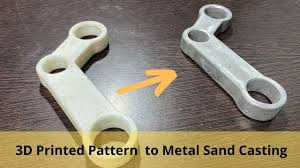
1. Traditional Sand Casting vs. Digital Sand Casting
In conventional sand casting, a physical pattern is required to form the mold cavity. Skilled pattern makers or CNC machining are used to create these patterns, which are then packed into sand to form molds. This process is:
Time-consuming
Labor-intensive
Expensive for complex or low-volume parts
Limited in design flexibility
In contrast, digital sand casting replaces or enhances these steps using 3D printing, either by:
Printing the pattern directly, or
Printing the sand mold or core itself using binder jetting technology
This eliminates or reduces the need for tooling and significantly shortens production cycles.
2. Two Main 3D Printing Approaches in Sand Casting
2.1 3D Printed Sand Casting Patterns
In this approach, large-format 3D printers create the pattern (the positive model) used in traditional molding.
Workflow:
CAD design of the part
3D printing the pattern
Sand molding around the pattern
Pattern removal
Metal casting
This method modernizes traditional sand casting while still using conventional foundry processes. It significantly reduces lead time compared to CNC machining or manual pattern making.
Key benefits:
Faster tooling production
Lower cost for prototypes and low-volume runs
Easier design iteration
Ability to produce complex geometries
However, the mold-making process itself remains traditional.
2.2 Binder Jet Sand 3D Printing (Direct Mold/Core Printing)
This is the most advanced method, where sand itself is 3D printed into molds or cores layer by layer using a binder.
Workflow:
CAD model sliced digitally
Thin layers of sand spread in a build chamber
Binder selectively printed to bond sand particles
Layer-by-layer construction of molds or cores
Direct use in metal casting
This process removes the need for physical patterns entirely.
Key advantages:
No tooling required
Extremely complex internal geometries possible
Rapid prototyping and production flexibility
Direct-from-digital manufacturing
Binder jet sand printing supports materials like silica and ceramic sand and can be used for aluminum, iron, steel, and magnesium casting.
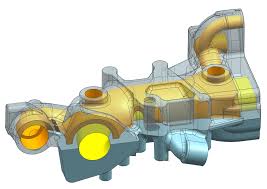
3. Major Advantages of 3D Printed Sand Casting
3.1 Design Freedom
Traditional sand casting requires:
Draft angles
Simple parting lines
Limited internal geometry
With 3D printing, engineers can create:
Complex internal channels
Undercuts and organic shapes
Integrated core assemblies
Lightweight optimized structures
This allows parts to be designed for performance rather than manufacturability.
3.2 Faster Production Cycles
Digital sand casting dramatically reduces lead times:
Pattern production: days instead of weeks
Mold creation: hours instead of manual assembly
Iteration: immediate CAD updates
Design changes no longer require rebuilding physical tooling.
3.3 Cost Reduction
3D printing eliminates or reduces:
Core boxes
Pattern tooling
CNC machining time
Manual labor in pattern assembly
This is especially valuable for:
Low-volume production
Prototype casting
Custom or one-off parts
3.4 Core Consolidation and Assembly Reduction
Traditional sand casting often requires multiple assembled cores. With binder jetting:
Multiple cores can be merged into one printed structure
Assembly errors are eliminated
Casting consistency improves
Labor requirements are reduced
3.5 Improved Iteration and Product Development
Digital workflows enable rapid testing:
Multiple design versions can be printed in parallel
CAD adjustments can be implemented instantly
Feedback cycles are significantly shortened
This makes sand casting more compatible with modern product development cycles.
4. Applications of 3D Printed Sand Casting
3D printed sand molds and patterns are widely used in:
Industrial Manufacturing
Engine blocks
Valve bodies
Turbine components
Automotive Industry
Lightweight structural components
Custom prototypes
Interior and seating tooling
Aerospace
Complex housings
Lightweight optimized parts
High-performance prototypes
Industrial Maintenance
Replacement parts for obsolete equipment
On-demand spare parts production
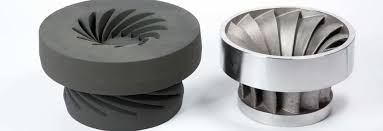
5. Materials and Technology in Binder Jet Sand Printing
Binder jet systems use:
Silica sand (most common)
Ceramic sand (for higher temperature resistance)
Specialized binders such as furan or phenolic resins
These binders are selectively deposited to bond sand layers without heat, creating strong but sacrificial molds for casting.
Key technical considerations include:
Layer thickness control
Binder strength and thermal stability
Sand particle size distribution
Surface finish optimization
6. Industry Impact and Transformation
The adoption of 3D printed sand casting is reshaping foundries worldwide:
Reduction in skilled labor dependency
Faster response to customer demand
Shift from tooling-based to digital manufacturing
Increased competitiveness for small and mid-size foundries
Manufacturers can now produce complex castings without investing in expensive tooling infrastructure, enabling more flexible and scalable production models.
Conclusion
3D printing is fundamentally changing sand casting by replacing traditional tooling with digital pattern creation and binder jet sand mold printing. Whether through printed patterns or fully printed molds, the technology delivers:
Faster production
Lower costs
Greater design freedom
Improved iteration speed
Reduced assembly complexity
As foundries continue to digitize, sand casting is evolving from a craft-based process into a highly flexible, software-driven manufacturing system, enabling new levels of innovation in metal component production.
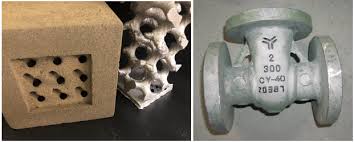
Dongrun Casting has 20000 square meters of facility houses and 200 production & test equipment, From quotation and tooling design to casting and finished machining, we can work with you at every stage. We serve a wide range of industries-from Fortune 500 corporations to small and midsize OEMs. Our products include Automotive&trucking, Electric Utility & Communications, Metering Systems, the Hydraulic Industry, Medical Devices, Lighting, Fuel and Gas Pressure, and Furniture parts.
More Details: www.dongruncasting.com